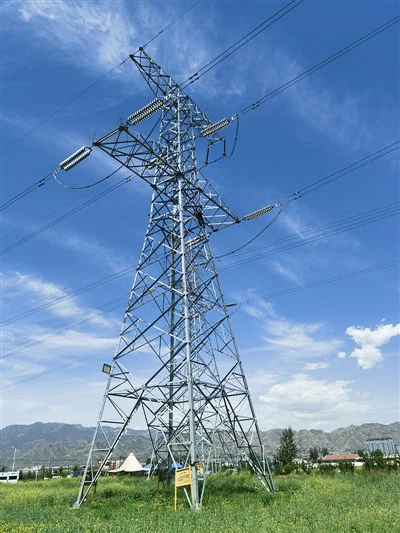
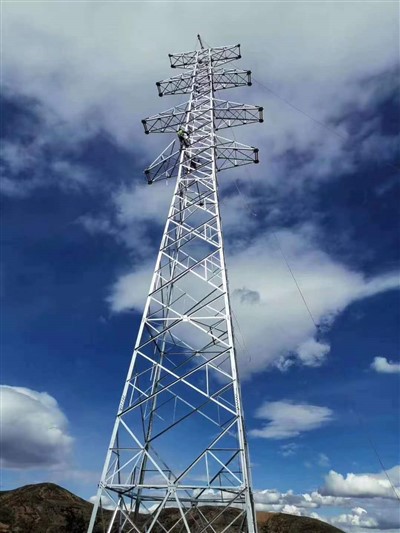
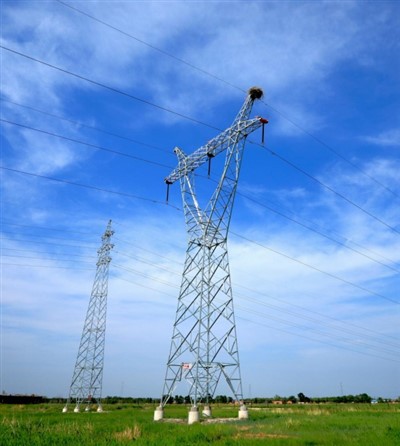
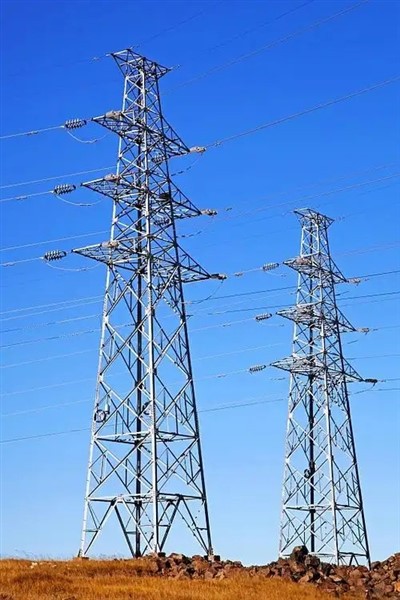
A self-supporting transmission tower is a free-standing steel tower used for overhead power lines. It relies on its own foundation, main legs, bracing system, and crossarms to resist vertical and horizontal loads. Because it does not need guy wires, it is useful near roads, substations, industrial land, and areas where the right-of-way must stay compact. The tower can be designed as a lattice tower or tubular steel structure.
Product Parameters
|
Parameter |
Description |
|
Material |
Q235B, Q355B, Q420, or specified steel grade |
|
Structure |
Free-standing lattice or tubular tower |
|
Foundation |
Independent concrete foundations or project-based foundation design |
|
Surface |
Hot-dip galvanizing, with optional paint marking |
|
Application |
Power line support in limited land or high-load positions |
|
Design Basis |
Wind zone, span, voltage, conductor tension, and site condition |
Project Details
Our service scope for compact transmission sites includes drawing review, tower-member fabrication, drilling, hot-dip galvanizing, numbered packing, delivery, and installation support. Before production, base width, leg slope, crossarm elevation, grounding points, foundation center dimensions, and bolt grades are checked against the approved drawings. Each self-supporting transmission tower is then divided into marked leg, body, and crossarm sections so the site team can assemble the structure in the planned sequence.
Main Applications
Use a self-supporting transmission tower where guy anchors would take up too much land or interfere with roads, plant areas, substations, and existing utilities. The free-standing structure is also suitable for crossings and restricted corridors that need a compact foundation arrangement. Tower height, base width, and crossarm layout are adjusted to the available site and line clearance.
Quality Check

Material certificates and drawing revisions are checked before cutting. During fabrication, we inspect plate welds, member length, hole diameter and alignment, brace matching, base-plate dimensions, and bolt grades. After galvanizing, coating coverage, zinc buildup at holes, straightness, section numbers, bolt quantities, and packing labels are checked. Trial assembly can be arranged for connection points that are difficult to verify from individual members.
FAQ
Q: Does it need guy wires?
A: No. It is designed to stand by its own legs and foundation. This helps the self-supporting transmission tower arrive with fewer mixed parts.
Q: Is it suitable for small sites?
A: Yes. It is often used where anchors for guy wires cannot be arranged.
Q: Can drawings be customized?
A: Yes. The layout can be made based on voltage, span, wind data, and foundation limits.
Hot Tags: self-supporting transmission tower, China self-supporting transmission tower manufacturers, suppliers, factory, Electric Transmission Line Tower, High Voltage Electric Tower, High Voltage Power Transmission Towers, lattice steel transmission tower, power line transmission towers, transmission tower with grounding wires