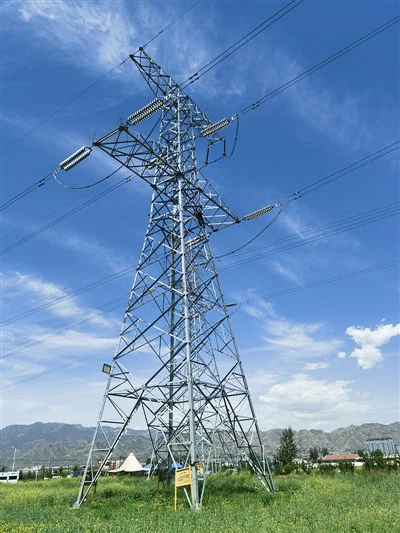
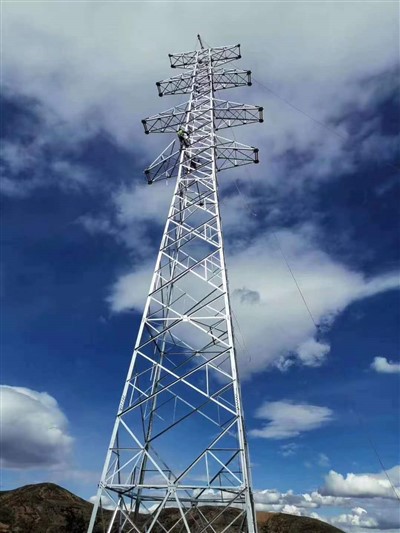
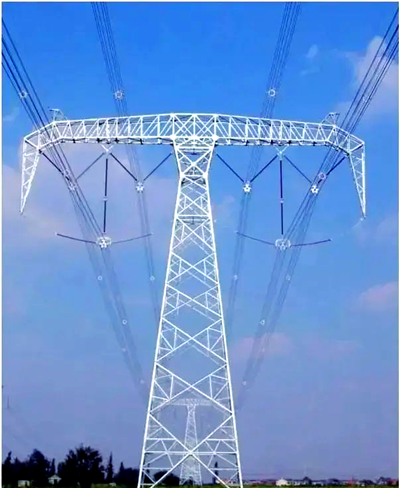
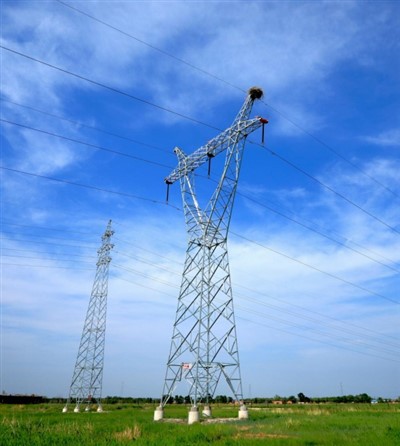
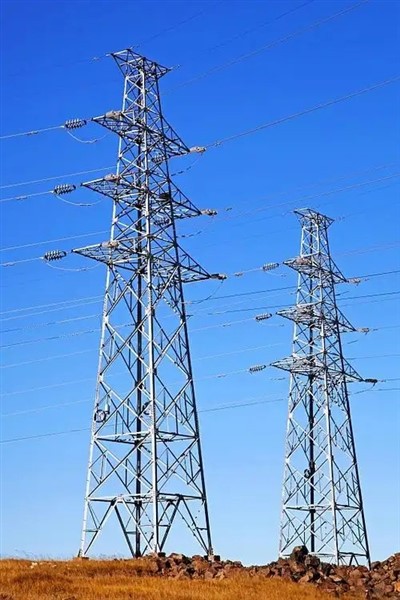
A suspension type transmission tower is used mainly on straight sections of overhead power lines. Its basic job is to hang conductors with suspension insulator strings and keep the required electrical clearance. It normally bears vertical loads from conductors, ground wires, hardware, wind, and ice. It is not used as a main anchor tower, so the member layout is lighter than a tension tower when the line condition allows it.
Product Parameters
|
Parameter |
Description |
|
Material |
Galvanized structural steel, angle steel, or tubular steel |
|
Surface |
Hot-dip galvanized coating for outdoor use |
|
Insulator Layout |
Suspension string, I string, or V string by design |
|
Load Type |
Vertical load, wind load, and ice load on straight line sections |
|
Application |
Straight sections of overhead transmission lines |
|
Accessories |
Crossarms, bolts, step bolts, grounding parts, and hardware plates |
Product Advantages
On a suitable straight-line section, the suspension type transmission tower transfers conductor weight, wind load, and ice load through the crossarms and lattice body without acting as the main line anchor. This allows a simpler member layout than a tension tower designed for the same voltage class. Numbered bolted sections are easier to transport, assemble, inspect, and replace during line maintenance.
Use Notes
Use the suspension type transmission tower on straight or gently turning sections where the conductors are carried by suspension insulator strings. Before selection, confirm span, conductor and ground-wire models, wind speed, ice thickness, tower height, and insulator-string arrangement. A sharp angle, terminal point, or section with high longitudinal tension normally requires a tension or terminal tower instead.
Installation Notes

Sort members by tower section before lifting.
Keep insulator hanging points in the correct direction.
Tighten bolts after the full tower shape is stable.
Recheck verticality before conductor stringing.
FAQ
Q: Where is this tower normally used?
A: It is used on straight line sections where the conductor only needs support, not anchoring. This helps the suspension type transmission tower arrive with fewer mixed parts.
Q: Can it work in cold areas?
A: Yes, but the ice load and wind load must be included in the design before production.
Q: What information is needed for quotation?
A: Voltage grade, tower height, span, conductor model, wind speed, ice thickness, and drawing are needed.
Hot Tags: suspension type transmission tower, China suspension type transmission tower manufacturers, suppliers, factory, dead end transmission tower, Electric Line Tower, electric power transmission towers, High Voltage Electric Tower, lattice steel transmission tower, tower for switchyard