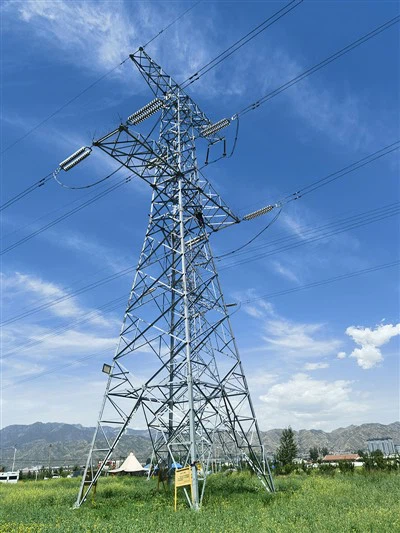
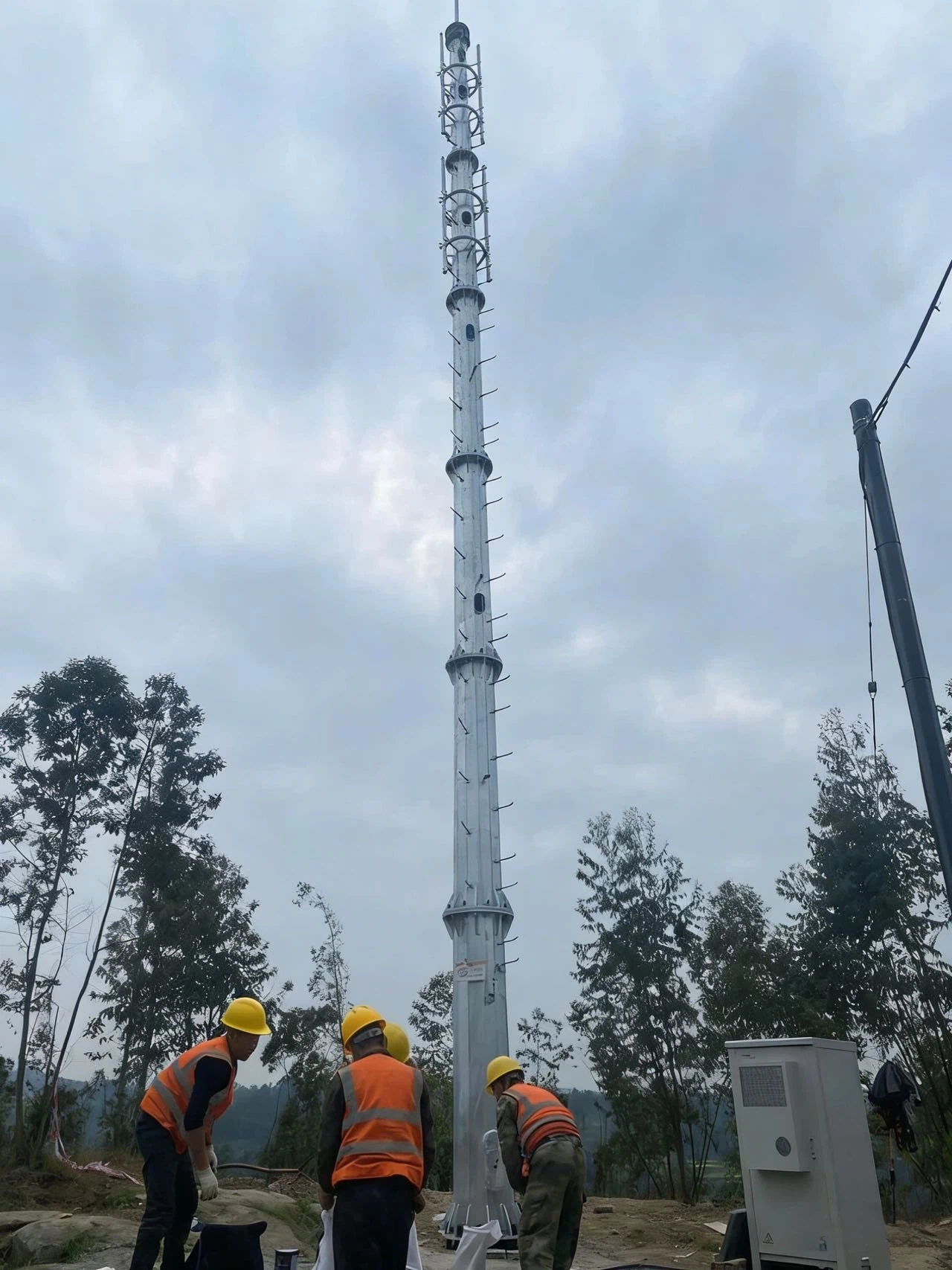
Material choice is not a small detail for a power line tower. It affects weight, transport, corrosion control, and the way the tower handles wind or ice. These transmission line towers can be made of steel, aluminum, or concrete and are designed to withstand extreme weather conditions. In many outdoor power line projects, galvanized steel is still widely used because it gives a strong structure and practical cost control.
A suspension type transmission tower usually works on straight line sections. It carries the vertical load from conductors, insulator strings, hardware, wind, and ice. Because it is not normally used as an anchor point, the material plan must match the real line condition. If the span is long or the ice area is heavy, the tower members need a different size and strength level.
An angular steel transmission tower is often chosen when the project needs simple fabrication, clear member marking, and easy replacement of parts. Before production, the buyer should confirm steel grade, galvanizing thickness, bolt grade, hole position, and packing method. These checks make the tower easier to build and easier to inspect after years of service.
When the material list is clear, workers can connect tower members without guessing, and the field work can stay closer to the approved drawing.